Essential Documents for Any International Work Visa Application
The processing of international work visas is governed by the sovereign immigration laws of individual nation-states. While specific bilateral agreements and regional blocs, such as the European Union or the ECOWAS region, provide distinct mobility frameworks, the foundational requirements for third-country nationals seeking employment visas remain highly standardized globally. Immigration authorities mandate the submission of verified, authenticated documentation to assess an applicant's identity, professional qualifications, security background, and the legitimacy of the prospective employment. This document outlines the universal documentary requirements necessary for initiating a standard international work visa application.

Foundational Identity Documents
The initial phase of any immigration adjudication process requires the absolute verification of the applicant's identity and citizenship status. Consular officers and border agencies utilize these documents to run preliminary security checks against international databases such as INTERPOL and regional security networks.
The International Passport
The passport is the primary travel and identity document. For work visa applications, immigration authorities universally enforce strict validity requirements.
- Validity Period: The passport must remain valid for a specific duration beyond the intended period of stay. The standard baseline requirement is six months of validity beyond the applicant's planned date of entry, as mandated by the U.S. Department of State and similar international bodies.
- Blank Pages: The document must contain a minimum of two contiguous blank visa pages for the affixing of visa foils and entry/exit stamps.
- Physical Condition: Passports exhibiting significant physical damage, watermarks, or detached pages are routinely rejected.
- Previous Passports: Applicants are frequently required to submit all expired passports to establish their international travel history and verify prior compliance with immigration laws.
Civil Status Records
Depending on the visa category, particularly those permitting dependent family members (derivative visas), primary civil documents are required.
- Birth Certificates: Must be issued by the competent national civil registry, detailing the names of both biological parents.
- Marriage and Divorce Decrees: Required to prove the legal status of a spouse accompanying the primary applicant.
Verification of Employment and Sponsorship
Work visas are explicitly tied to the applicant's economic activity within the destination country. Immigration authorities require definitive proof that a legally registered corporate entity is sponsoring the applicant and that the employment complies with domestic labor laws.
The Binding Employment Contract
A formalized, legally binding employment contract must be submitted. This document is scrutinized by agencies such as the UK Visas and Immigration (UKVI) or the relevant national labor ministry to ensure compliance with statutory minimum wage laws and working hours. The contract must explicitly state:
- The official job title and corresponding occupational classification code.
- The gross annual or monthly salary, excluding variable performance bonuses.
- The standard weekly working hours.
- The exact physical location where the labor will be performed.
- The duration of the contract (fixed-term or indefinite).

Corporate Sponsorship Authorization
In many jurisdictions, the employer must obtain prior authorization from the government before the foreign national can apply for the visa.
- Sponsorship Certificates: Employers in the United Kingdom must issue a Certificate of Sponsorship (CoS), which contains a unique reference number linking the applicant to the approved corporate sponsor.
- Labor Certification: In the United States, employers must frequently secure an approved Labor Condition Application (LCA) from the Department of Labor, or an approved Form I-129 petition from U.S. Citizenship and Immigration Services (USCIS), prior to the consular interview.
Academic and Professional Credentials
Employment visas targeting highly skilled professionals require rigorous verification of the applicant's academic background and specialized expertise.
Degree Certificates and Academic Transcripts
Applicants must submit original or certified copies of their university degrees, diplomas, and the corresponding academic transcripts detailing the specific coursework completed.
- Relevance: The academic qualification must directly align with the occupational duties outlined in the employment contract.
- Equivalency: Many nations require foreign degrees to be evaluated against their domestic educational framework. For example, countries utilizing the European Qualifications Framework (EQF) require proof that a third-country degree is equivalent to the corresponding European academic level, often assessed by designated national recognition information centers (ENIC-NARIC).
- Professional CV/Resume: A comprehensive curriculum vitae detailing the applicant's employment history, specific project experience, and technical competencies.
Professional Licenses and Registrations
If the prospective employment falls within a regulated profession—such as clinical medicine, civil engineering, or law—the applicant must provide proof of licensure recognized by the destination country's competent authority.
- Practicing clinical medicine in the United Kingdom requires registration with the General Medical Council (GMC).
- Practicing engineering in Canada requires licensure from the respective provincial engineering regulatory body. Failure to secure this occupational recognition generally invalidates the work visa application, regardless of corporate sponsorship.

Security and Criminal Background Clearances
Sovereign states possess the absolute right to restrict the entry of foreign nationals with specific criminal convictions. Employment visa applications universally require verifiable proof of a clean criminal record to protect national security and public safety.
Police Clearance Certificates
Applicants must submit a Police Clearance Certificate (PCC), also known as a Certificate of Good Conduct or Criminal Record Check.
- Jurisdictional Scope: Immigration authorities typically require a PCC from the applicant's country of citizenship, as well as from any country where the applicant has resided continuously for more than six months (or 12 months, depending on the jurisdiction) over the preceding five to ten years.
- Issuing Authorities: These documents must be issued directly by federal or national law enforcement agencies. For example, applicants residing in the United States must submit an FBI Identity History Summary Check, while those in the UK require an ACRO Police Certificate. Local or municipal police reports are universally rejected by consular officers.
- Validity Timeframes: Background checks possess strict expiration dates, frequently becoming invalid for immigration purposes if they are older than three to six months at the time of application submission.
Health and Medical Clearances
To mitigate public health risks and prevent undue burden on domestic healthcare systems, immigration authorities mandate specific medical screenings for long-term visa applicants.
Standardized Medical Examinations
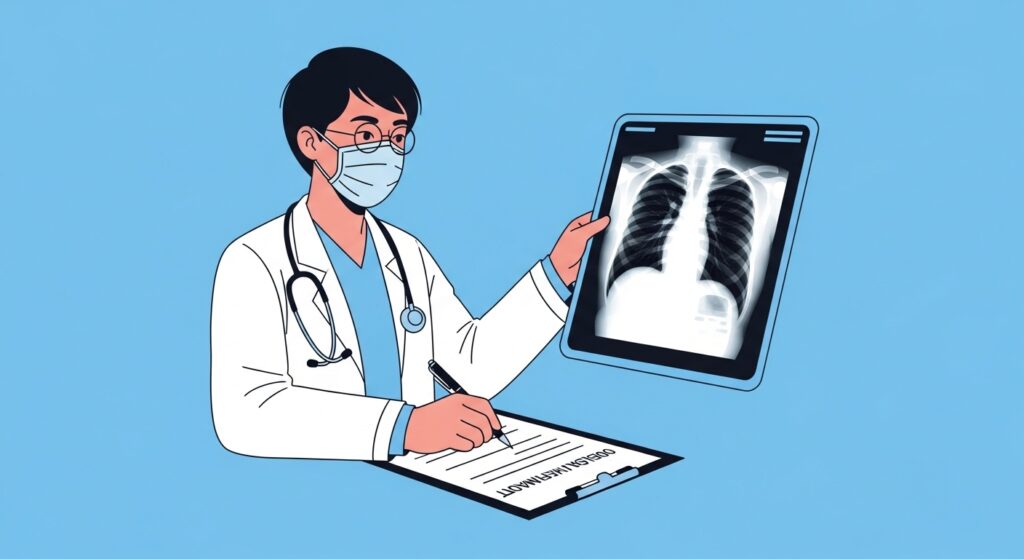
Foreign workers must undergo a comprehensive medical examination to rule out communicable diseases of public health significance, such as active tuberculosis, syphilis, or specific viral hemorrhagic fevers.
- Panel Physicians: These examinations cannot be conducted by the applicant's personal doctor. They must be administered strictly by a "panel physician" or medical clinic officially approved and contracted by the destination country's immigration department.
- Tuberculosis (TB) Testing: Jurisdictions such as the UK, Australia, and Canada mandate specific chest X-ray screening for applicants originating from countries identified by the World Health Organization (WHO) as having a high incidence of tuberculosis.
Financial Solvency and Accommodation
While the employment contract proves future income, authorities frequently require proof that the applicant possesses the logistical and financial capacity to support themselves immediately upon arrival, prior to receiving their first payroll disbursement.
Proof of Funds
Unless the corporate sponsor explicitly guarantees to cover the initial living and repatriation costs—and provides a certified letter of maintenance—the applicant must submit stamped bank statements. These statements must demonstrate a consistently maintained minimum balance (defined by the respective immigration authority) over the preceding three to six months.
Proof of Accommodation
Consular officers may request documentation verifying where the applicant will reside upon entering the country. This can be satisfied by providing a formalized rental agreement, a deed of property ownership, or a letter from the corporate sponsor detailing temporary corporate housing arrangements.
Document Authentication and Translation Protocols
Submitting original documents is insufficient if the receiving immigration authority cannot independently verify their authenticity. Administrative law dictates strict protocols for the international legalization of civil and academic records.
The Hague Apostille and Diplomatic Legalization
Documents issued outside the destination country must undergo formal authentication.
- The Apostille: If both the issuing country and the destination country are signatories to the 1961 Hague Convention, public documents (birth certificates, marriage certificates, police records) must receive an Apostille from the competent authority in the issuing state.
- Consular Legalization: If the issuing country is not a Hague signatory, the document must be subjected to a chain of authentication, culminating in diplomatic legalization by the destination country's embassy or consulate located within the issuing nation.
Certified Sworn Translations
Any document not originally drafted in the official language (or languages) of the destination country must be accompanied by a comprehensive translation.
- Immigration departments explicitly reject commercial, uncertified, or self-translated documents.
- Translations must be executed by a sworn, certified translator officially recognized by the destination country's judicial or administrative systems. The translation must bear the translator's official stamp, signature, and a declaration certifying the accuracy of the translated text against the original document.
Read more about: [Global Immigration Fraud Prevention and Cybersecurity]
Disclaimer: This guide is for informational purposes only and is based on public data available for 2026. Visandwork.com is not a government agency, does not issue visas, and does not provide personalized legal or immigration advice. Always consult official government portals before initiating any application process.