Canada's National Occupational Classification (NOC): In-Demand Jobs for 2026
The Canadian labor market and its corresponding immigration frameworks are entirely structured around the National Occupational Classification (NOC). Administered jointly by Employment and Social Development Canada (ESDC) and Statistics Canada, the NOC is the national reference for occupations in Canada. For foreign nationals seeking to enter the country through economic immigration pathways in 2026, understanding their exact NOC code and its corresponding demand is a mandatory prerequisite. This classification dictates eligibility for the Express Entry system, the Provincial Nominee Programs (PNP), and the Temporary Foreign Worker Program (TFWP).
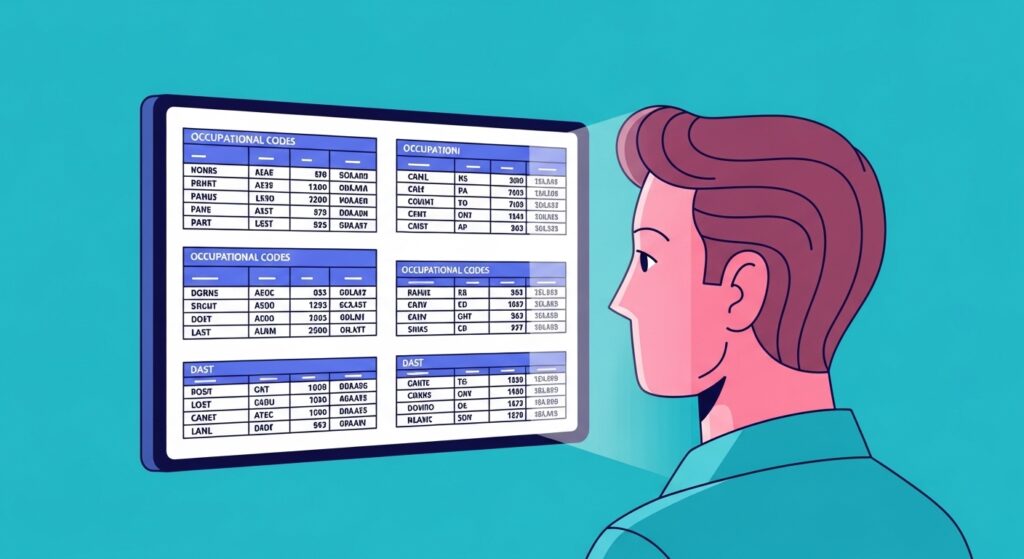
The TEER System Structure
The NOC utilizes the Training, Education, Experience and Responsibilities (TEER) system to categorize employment. Immigration, Refugees and Citizenship Canada (IRCC) utilizes this six-category system to determine eligibility for federal and provincial economic programs.
- TEER 0: Management occupations (e.g., financial managers, engineering managers).
- TEER 1: Occupations that usually require a university degree (e.g., software engineers, financial advisors).
- TEER 2: Occupations that usually require a college diploma, apprenticeship training of two or more years, or supervisory responsibilities (e.g., computer network technicians, web technicians).
- TEER 3: Occupations that usually require a college diploma, apprenticeship training of less than two years, or more than six months of on-the-job training (e.g., dental assistants, licensed practical nurses).
- TEER 4: Occupations that usually require a high school diploma or several weeks of on-the-job training (e.g., home child care providers, retail salespersons).
- TEER 5: Occupations that usually need short-term work demonstration and no formal education (e.g., landscaping and grounds maintenance laborers, delivery service drivers).
Federal economic immigration programs, specifically those managed under Express Entry, generally require work experience classified under TEER 0, 1, 2, or 3.
Category-Based Selection Protocols
In response to acute demographic shifts and domestic labor shortages, IRCC conducts targeted Category-Based Selection draws within the Express Entry pool. Instead of issuing Invitations to Apply (ITAs) solely based on Comprehensive Ranking System (CRS) scores, the government targets candidates with documented work experience in specific NOC codes. According to IRCC departmental mandates, the primary occupational categories prioritized for 2026 include healthcare, STEM professions, skilled trades, transport, and agriculture and agri-food.

Top In-Demand Sectors and Specific NOC Codes
Labor market data aggregated by the Canadian Job Bank and provincial labor ministries indicates sustained shortages across several high-skill sectors. Candidates possessing credentials in these fields benefit from expedited processing and lower CRS score thresholds during targeted draws.
1. Healthcare and Medical Professions
The Canadian healthcare infrastructure relies heavily on foreign-trained medical professionals to mitigate critical staffing deficits, particularly in rural and northern communities. Provincial regulatory bodies manage the licensing of these professions, but federal immigration prioritizes their entry.
- Registered Nurses and Registered Psychiatric Nurses (NOC 31300 / TEER 1): Consistent demand exists across all provinces. Applicants generally require a university degree in nursing and must complete the registration process with a provincial nursing regulatory body.
- Licensed Practical Nurses (NOC 32101 / TEER 3): This role requires completion of a college nursing program and is in high demand for long-term care facilities and regional hospitals.
- General Practitioners and Family Physicians (NOC 31102 / TEER 1): To address primary care shortages, IRCC prioritizes foreign-trained physicians who have secured provincial licensing or are entering rural practice incentive programs.
2. Science, Technology, Engineering, and Mathematics (STEM)
Canada's technology sector, concentrated in hubs like Toronto, Vancouver, and Montreal, continues to require international talent to sustain its expansion. The Global Talent Stream (GTS), a component of the Temporary Foreign Worker Program, provides expedited two-week processing for specific STEM occupations.
- Software Engineers and Designers (NOC 21231 / TEER 1): Professionals with expertise in artificial intelligence, cloud architecture, and full-stack development are aggressively recruited.
- Information Systems Specialists (NOC 21222 / TEER 1): Roles focused on cybersecurity infrastructure and enterprise data management are essential across financial institutions and government agencies. Furthermore, data scientists and machine learning engineers are heavily recruited under TEER 1 to support the growing artificial intelligence sector and advanced manufacturing logistics.
3. Skilled Trades and Industrial Manufacturing
The Canadian construction and manufacturing sectors face significant demographic retirement waves, necessitating the continuous importation of skilled tradespeople. The Federal Skilled Trades Program (FSTP) specifically targets these occupations, offering lower language proficiency thresholds compared to other Express Entry streams.
- Industrial Electricians (NOC 72201 / TEER 2): High demand exists in manufacturing hubs across Ontario and resource extraction sectors in Alberta and Saskatchewan.
- Welders and Related Machine Operators (NOC 72106 / TEER 2): Essential for national infrastructure development, pipeline construction, and federal shipbuilding contracts.
- Heavy-Duty Equipment Mechanics (NOC 72401 / TEER 2): Critical for maintaining operational continuity in the large-scale mining, forestry, and agricultural sectors.

4. Transport and Supply Chain Logistics
The integrity of the North American supply chain relies heavily on the Canadian transport sector. Recognizing acute vulnerabilities in this area, IRCC has designated transport occupations as a priority category for targeted Express Entry draws.
- Transport Truck Drivers (NOC 73300 / TEER 3): This represents one of the most critical, sustained labor shortages in Canada. Multiple provinces offer dedicated PNP streams specifically designed for long-haul truck drivers to expedite their transition to permanent residency.
- Supply Chain and Logistics Supervisors (NOC 12013 / TEER 2): Professionals required to manage complex distribution networks, warehousing facilities, and cross-border commercial transit protocols.
5. Agriculture and Agri-Food Processing
To maintain domestic food security and fulfill international export capacities, Canada utilizes specific immigration pilots and temporary worker streams dedicated to agricultural occupations.
- Agriculture Managers (NOC 80020 / TEER 0): Professionals managing large-scale crop production, viticulture, and livestock facilities.
- General Farm Workers (NOC 84120 / TEER 4) and Harvesting Labourers (NOC 85101 / TEER 5): While these lower TEER levels are generally excluded from the Express Entry system, they represent the primary focus of the Seasonal Agricultural Worker Program (SAWP). Furthermore, the federal Agri-Food Pilot provides a dedicated, LMIA-exempt pathway to permanent residency for specific occupations within meat processing, greenhouse crop production, and mushroom production.
Navigating the Immigration Impact of Your NOC Code
Identifying the correct NOC code is the absolute foundation of any Canadian immigration application. An applicant's daily responsibilities—not merely their official corporate job title—must align directly with the official "lead statement" and the main duties listed in the federal NOC database.
NOC Codes and Prevailing Wage Determinations
For employers utilizing the Temporary Foreign Worker Program, the assigned NOC code strictly dictates the mandatory prevailing wage that must be paid to the foreign worker. Employment and Social Development Canada (ESDC) extracts baseline wage data directly from the national Job Bank based on the specified NOC and the precise geographic location (economic region) of the employment.
Employers must legally guarantee this median wage to secure a positive Labour Market Impact Assessment (LMIA). Attempting to utilize a lower-TEER NOC code to justify a lower salary—when the actual daily duties reflect a higher-level, more complex occupation—is a primary trigger for rigorous ESDC audits, financial penalties, and LMIA denials.

Misrepresentation and Application Refusal
A common cause for permanent residency application refusal is NOC mismatch. When an application is reviewed, an IRCC officer assesses the provided reference letters, employment contracts, and pay records. If the officer determines that the documented duties do not conclusively prove the applicant performed a substantial number of the duties outlined in their claimed NOC code, the application is rejected.
This rejection is categorized as a failure to meet program requirements or, in severe cases, as misrepresentation. For example, claiming a TEER 0 management position while the submitted documentation reflects a TEER 1 or TEER 2 administrative or supervisory role will result in an immediate recalculation of the candidate's CRS score, often dropping them below the ITA cutoff threshold and voiding the application.
Provincial Nominee Program (PNP) Alignment
While IRCC manages federal categories, the ten Canadian provinces and three territories utilize the NOC system to govern their respective PNPs based on localized economic needs. An occupation that is not highly prioritized at the federal level may be acutely sought after in a specific province.
- Targeted Tech Draws: Provinces like British Columbia and Alberta conduct specific PNP draws strictly targeting professionals in designated TEER 1 and TEER 2 technology occupations, offering expedited processing times.
- In-Demand Skills Lists: Provinces such as Saskatchewan publish an "Excluded Occupation List," meaning any NOC not on that list may be eligible for their provincial streams. Conversely, provinces like Nova Scotia publish targeted "In-Demand" lists focusing heavily on healthcare aides and transport drivers.
Candidates must actively cross-reference their verified NOC code with the specific occupational demand lists published by provincial immigration authorities to maximize their pathways to Canadian permanent residency.
Read more about: [Canadian Provincial Nominee Programs (PNP) and Regional Labor Demands]
Disclaimer: This guide is for informational purposes only and is based on public data available for 2026. Visandwork.com is not a government agency, does not issue visas, and does not provide personalized legal or immigration advice. Always consult official government portals before initiating any application process.